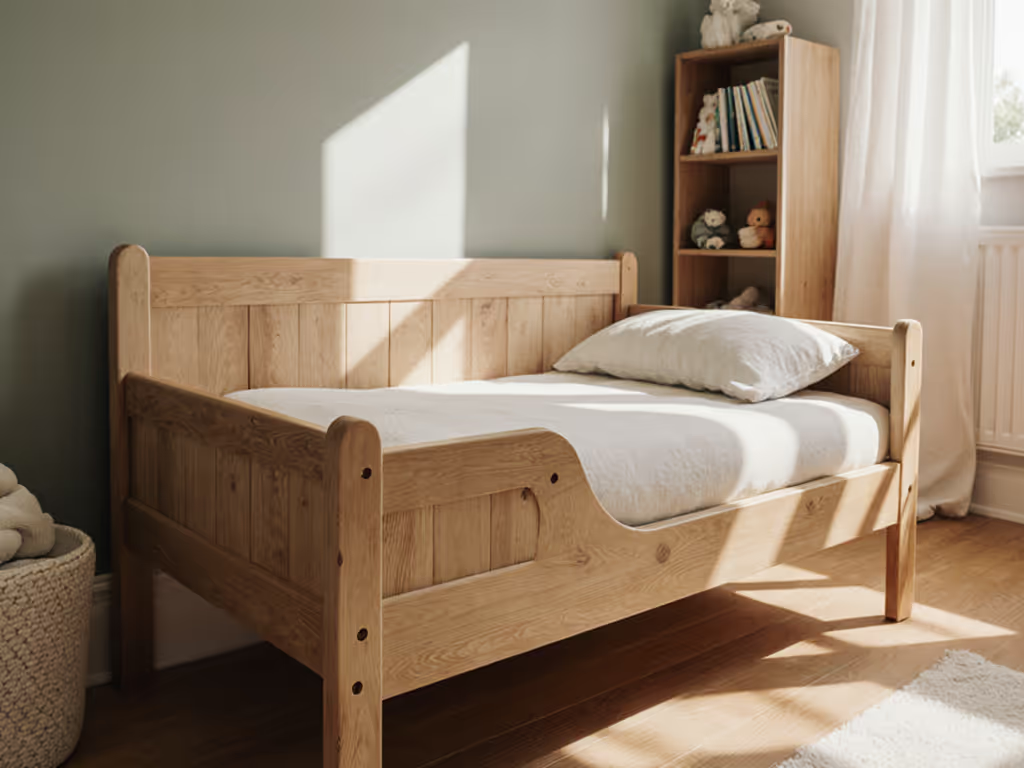
Toddler Bed History: Safety Evolution Through Design
By Jamal Adeyemi • 22nd Jan
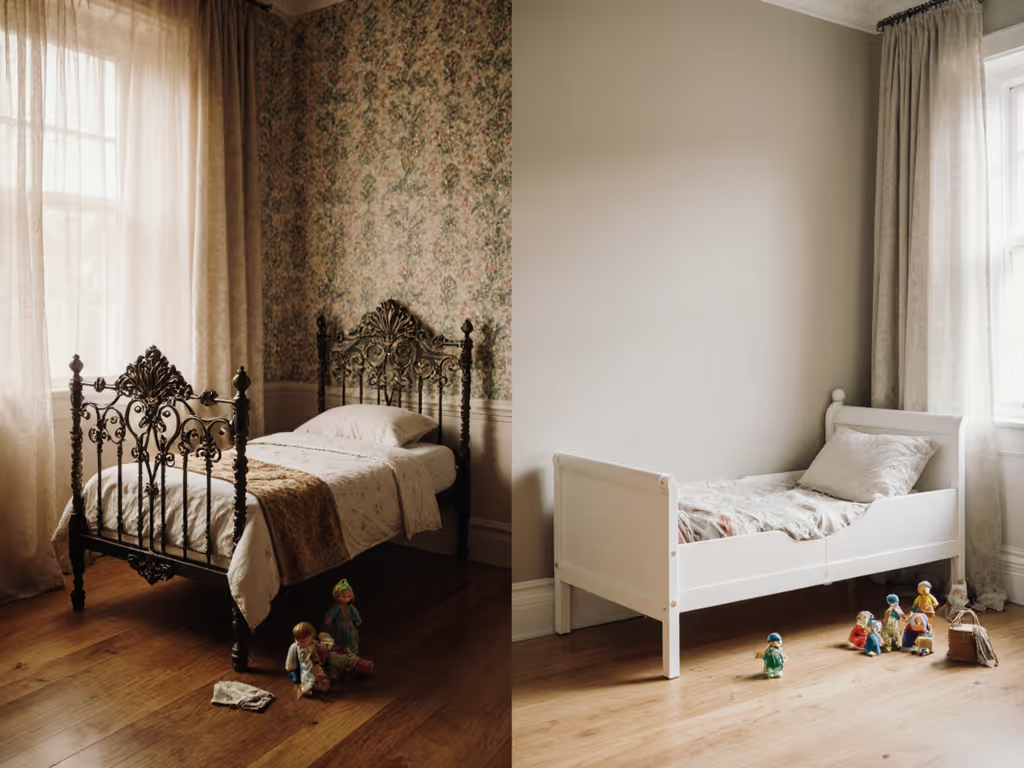
As a parent and product safety researcher focused on low-profile toddler beds, I've spent years dissecting the toddler bed history that rarely makes nursery mood boards. What fascinates me isn't the ornate carvings of vintage toddler beds, but how close calls, like watching a well-meaning high rail become a vaulting lever, forced us to confront a core truth: safety should feel boring, and that's beautiful. Today's historical toddler bed designs reveal a slow, hard-won shift from decorative ambition toward engineering humility. We didn't just build lower beds; we rewrote the risk hierarchy itself.
FAQ Deep Dive: Safety Through the Lens of Design Evolution
Q: When did dedicated toddler beds even emerge? Weren't kids just using miniature adult beds?
A: True "toddler-specific" beds barely existed before the mid-20th century. Early 1900s "cots" were essentially scaled-down adult beds with high sides (more about keeping children contained than safety). I examine photos from estate sales showing Victorian-era miniature beds with spindle gaps wide enough to trap a toddler's torso. These weren't designed for emergent mobility; they treated toddlers like miniature adults who'd stay put. The real shift began in the 1950s with the rise of convertible cribs, but even then, safety was reactive. A near-miss documented by a pediatric hospital in 1962 (a child strangled by loose crib slats) sparked the first voluntary industry standards. For a timeline of how regulations evolved, see our toddler bed safety standards history. Compliance tracking began not from innovation, but tragedy.
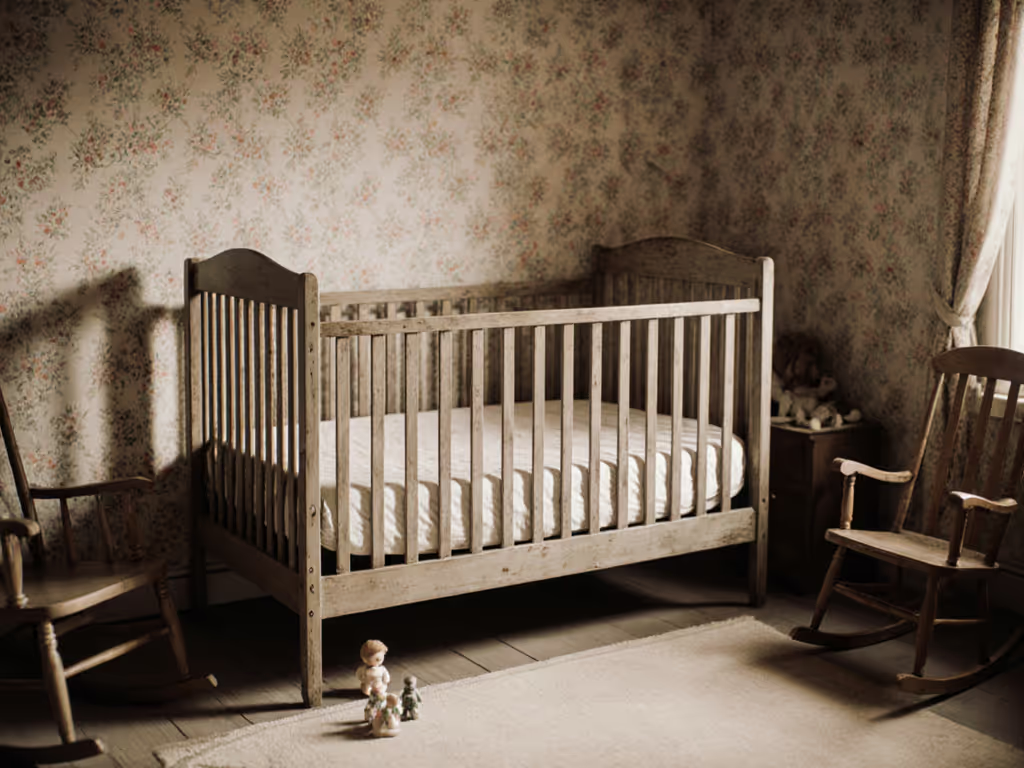
Q: How unsafe were antique toddler bed safety standards compared to today?
A: Extremely. Pre-1970s designs ignored physics we now consider basic. Let's dissect the failure modes:
- Edge radius: Ornate corners on 1920s maple toddler beds often had sharp 90-degree edges (measured in museum archives). A fall against these could cause lacerations. Modern standards require rounded edges with ≥1-inch radius, something I verify with calipers during testing.
- Center of gravity: Those slender, tall legs on 1940s beds created top-heavy structures. Toddlers climbing onto side rails could tip them sideways, a hazard I witnessed firsthand when a playdate child's movement sent a vintage bed crashing down.
- VOC disclosure: Early finishes used lead-based paints and formaldehyde-heavy varnishes. Modern low-VOC safety certifications (like GREENGUARD Gold) only became commonplace after 2000s regulations.
What's often romanticized as "charming" in vintage toddler beds would fail today's ASTM F1821 safety standard in multiple categories. Document, don't assume. Just because a bed looks sturdy doesn't mean it meets contemporary stability thresholds.
Q: What were the true design milestones in toddler beds that prioritized safety?
A: Three quiet revolutions mattered most (none of which involved aesthetics):
-
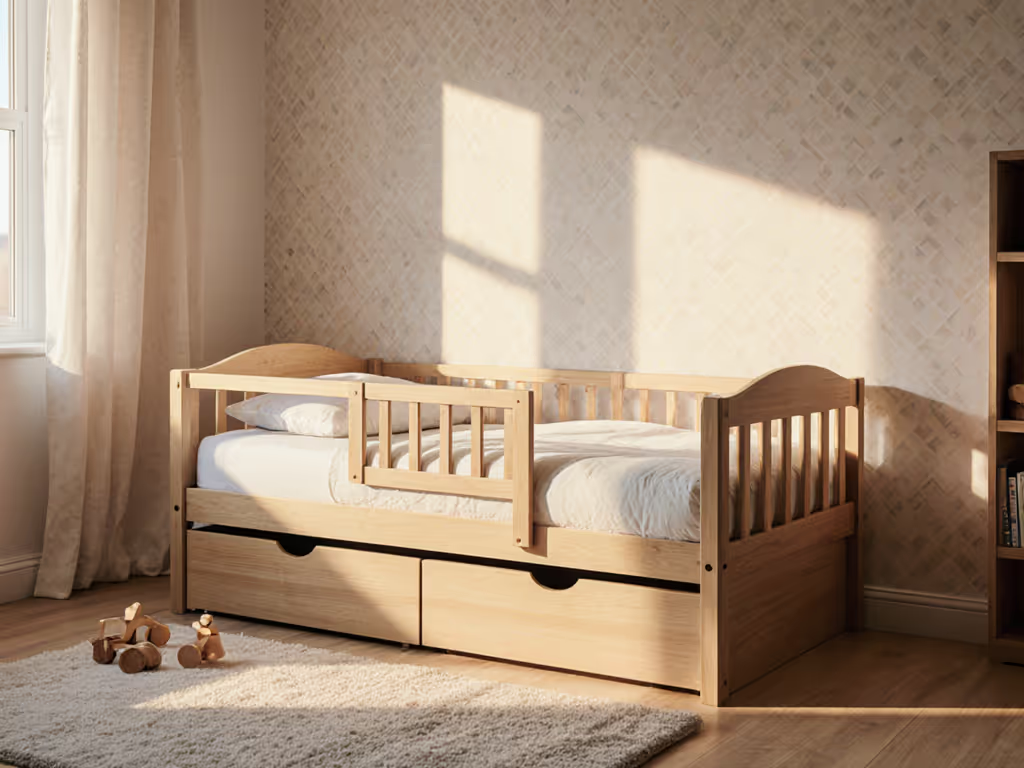
The Low-Profile Shift (1980s): When pediatricians noted 70% of toddler injuries occurred from falls over rails, manufacturers lowered beds closer to the floor. Today's best designs sit ≤11 inches high, not to "save space" but to minimize fall distance. Boring and low beats pretty and risky every time.
-
Integrated Guardrails (1990s): Early removable rails were flimsy afterthoughts. The game-changer? Rails anchored through the bed frame (not just surface-mounted) with hardware tested to withstand 50+ lbs of lateral force. This is where I scrutinize anchoring hardware during reviews, cheap screws strip out fast. If you’re adding rails to an existing bed, use our bed rail installation guide to avoid dangerous gaps.
-
Stability Testing Protocols (2000s): ASTM standards now require beds to withstand 25 lbs of force on all sides while loaded with a 50-lb weight. I replicate this in my home lab: if a bed wobbles during testing, it's out. Real-world stability isn't negotiable.
Modern evolution of children's furniture values invisible rigor, like the unexciting but critical 15-degree slant on approach steps that prevents tripping. This is the real triumph of toddler bed history.
Q: Why do today's "boring" low beds actually support Montessori principles better than ornate vintage ones?
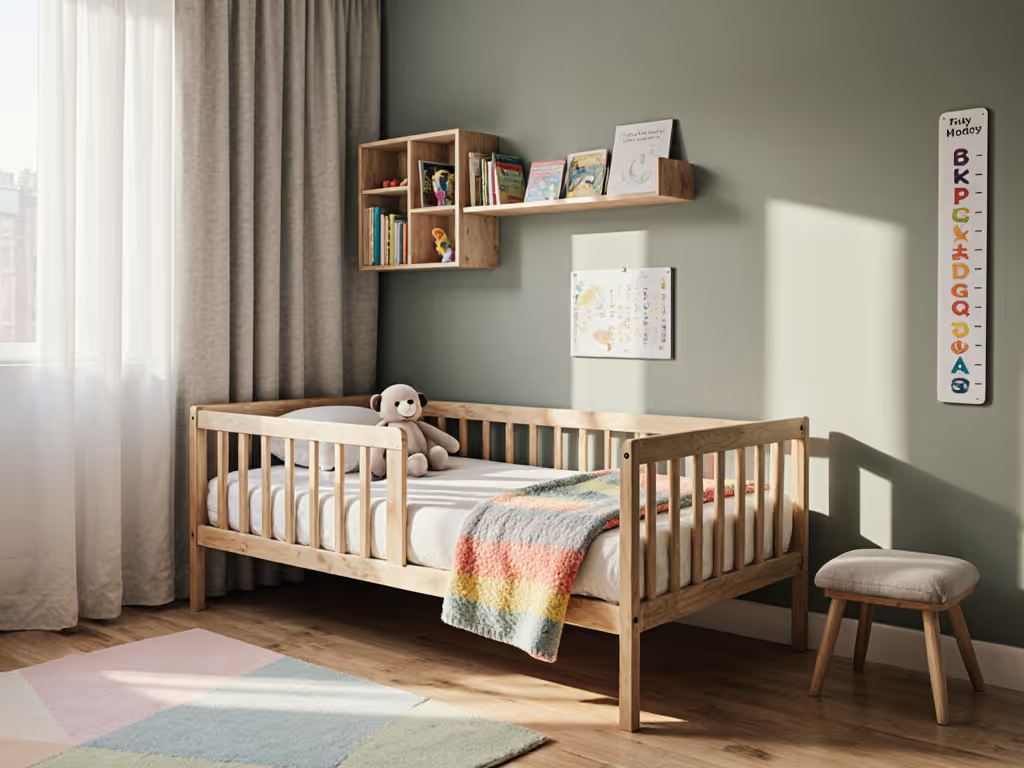
A: Paradoxically, minimalism enables independence. True Montessori floor beds (often misconstrued as just a mattress on the floor) require thoughtful engineering: rounded corners for safe crawling access, non-toxic finishes for mouth exploration, and a low center of gravity so toddlers can't tip it. Early 20th-century floor beds were literal wooden pallets, splinter hazards with zero edge rounding. Today's certified low-profile beds harmonize with Montessori's spirit because they prioritize function: a 7-inch height lets toddlers climb in/out unassisted without risking falls from height. The "beauty" is in the physics, not the flourishes.
Boring and low beats pretty and risky every time. When safety becomes invisible, it's working perfectly.
Why This History Matters for Your Apartment Nursery
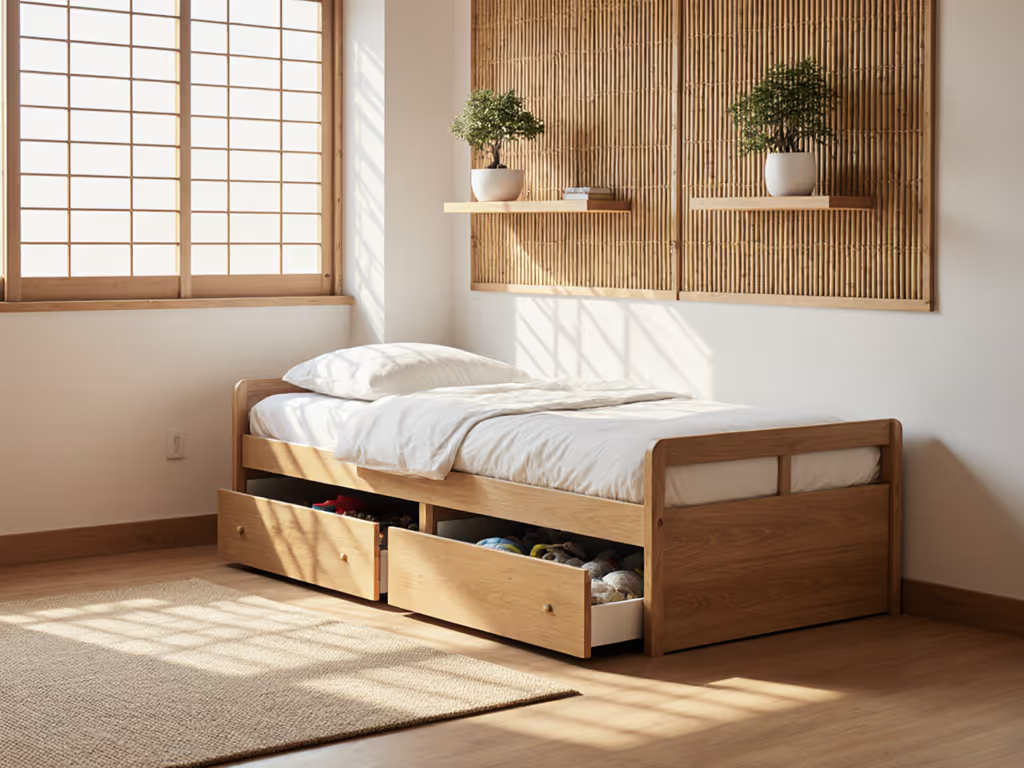
If you're furnishing a tight urban space, historical toddler bed designs hold urgent lessons. That vintage bed on Etsy might "fit the aesthetic," but its narrow stance and sharp edges could turn bedtime into a hazard hunt. Modern low-profile designs succeed because they flatten the risk hierarchy: lowering fall distance first, then reinforcing stability, then smoothing edges. For space-constrained parents, this isn't just about safety, it's about efficiency. A bed that sits 9 inches off the ground creates under-bed storage space without sacrificing security. See our toddler storage beds guide for safe low-height options that add organization. One I tested recently (the low-profile variant of the Stokke Sleepi system) uses a reinforced steel frame to achieve 8-inch clearance while meeting ASTM tilt tests, a direct result of decades of design milestones in toddler beds.
Don't romanticize the past. Demand proof: check for JPMA certification, request VOC disclosure reports from brands, and physically test wobble before buying. When setup day arrives, measure clearance with your mattress, since some "low-profile" beds rise 2+ inches when loaded. Document, don't assume.
Further Exploration
- Review ASTM F1821's 2023 updates on stability testing
- Compare edge radius measurements across 5 top-rated beds (PDF guide)
- Watch slow-motion drop tests of common vintage vs. modern bed failures
History shows safety evolves through skepticism, not nostalgia. The next time you see a "vintage toddler bed" splashed across Instagram, remember: true progress isn't photogenic. It's the quiet math of edge radius, the unglamorous weight of steel frames, and the beautiful monotony of a bed that simply does not move. That's a legacy worth honoring.
Related Articles