Built-In Toddler Bed Lights vs External: Best Fit
By Anika Gupta • 2nd May
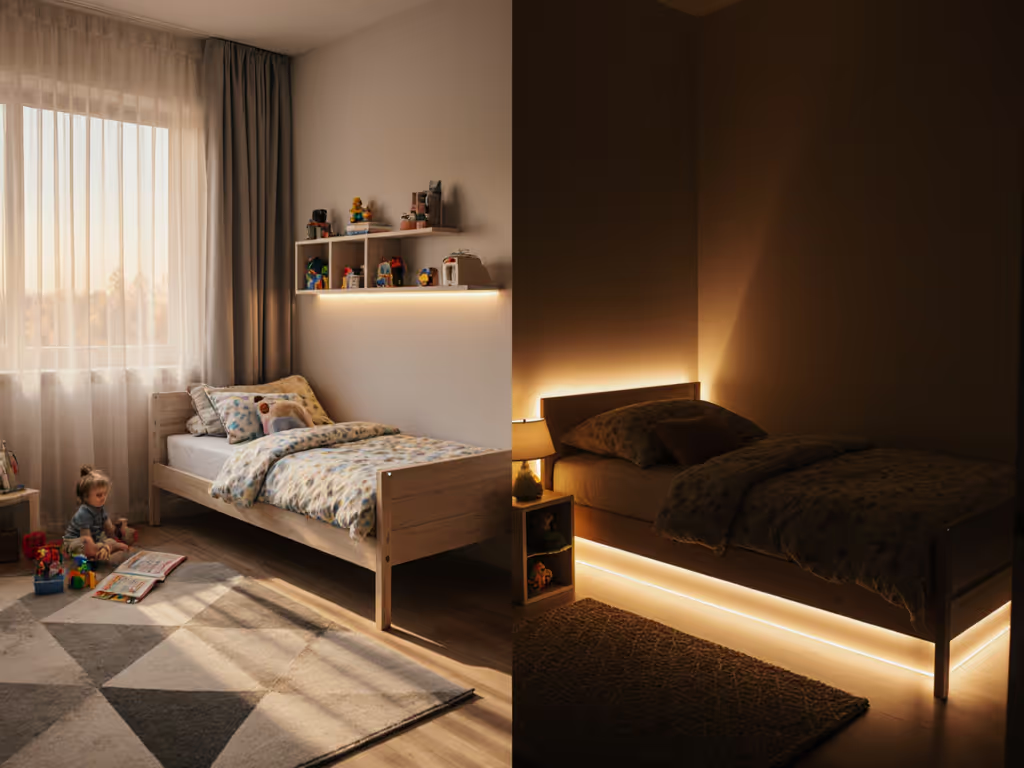
When choosing between integrated night light toddler beds and external lighting solutions, most parents focus on convenience and floor space. But there's a deeper question worth asking: what's actually in that light fixture, and will it compromise the calm, chemical-free environment you're trying to build? This deep dive examines built-in night light toddler beds through the lens of materials, off-gassing timelines, finish chemistry, and real-world durability, because healthier materials make calmer rooms, and that starts with what's attached to your child's bed.
What's the Real Difference Between Built-In and External Night Lights?
Built-In Lights: Integrated Into the Bed Frame or Headboard
Many toddler bed manufacturers now embed LED lights directly into the headboard, frame rails, or corner posts. These lights are wired to the bed structure and typically powered via a USB cable, battery pack, or hardwired adapter tucked beneath the frame.
Advantages often cited:
- One fewer object taking up floor or shelf space in a micro-room
- Synchronized with the bed's design aesthetic (critical for visual clutter reduction in small bedrooms)
- No risk of your toddler knocking over a standalone light and breaking it
What manufacturers rarely disclose:
- The plastic housing, circuit board, solder joints, and adhesives used in the integrated fixture
- The off-gassing timeline of those materials, especially if the bed arrives vacuum-sealed or wrapped in plastic
- Whether the finish on the plastic housing is paint-based, plastic-coated, or treated with flame retardants
External Night Lights: Separate Fixtures Placed Near or On the Bed
Traditional plug-in night lights, clip-on LED fixtures, and small USB-powered lamps sit outside the bed structure. They're placed on a nightstand, shelf, wall plug, or attached to the bed rail via a clip. If you go this route, secure cables and outlets using our childproofing cords and anchoring guide to eliminate entanglement risks.
Advantages:
- You control the source material and can research it independently before introducing it to your child's room
- Easier to replace if it fails without replacing the entire bed frame
- Simpler to remove during transitions (e.g., moving to a twin bed or relocating to another room)
- Less thermal mass and fewer hidden electronic components near where your child sleeps eight or more hours nightly
Trade-offs:
- Takes up floor or surface space, a real constraint in apartments and compact bedrooms under 1,200 sq ft
- Risk of cord entanglement if not managed well
- One more object to design around in a room already crowded with play zones and storage
Are Integrated Night Lights Safe? What the Materials Tell Us
This is where I diverge from marketing claims. The question isn't just "Is it safe?" but rather, "What does the finish chemistry reveal about the manufacturing process?"
Off-Gassing Timeline and Manufacturer Transparency
When a toddler bed with an integrated light arrives, especially if it has been vacuum-sealed or shipped in plastic wrap, you have received a sealed package of composite materials, adhesives, and electronic components that have been breathing minimally during transport. The moment you unbox it and expose it to room-temperature air, off-gassing begins.
Low-quality integrated lights often use:
- Phenol-formaldehyde or urea-formaldehyde adhesives in the plastic housing joints
- Polyvinyl chloride (PVC) plastics with phthalate plasticizers, which soften the material but emit volatile compounds over weeks
- Polyurethane potting compounds around solder joints, which can release unreacted isocyanates
- Paint or spray-applied finishes on the plastic, which may contain VOCs even if labeled "low-VOC"
A manufacturer that is transparent will:
- Disclose the specific plastic resin used (e.g., polycarbonate vs. ABS vs. PVC)
- Provide a Safety Data Sheet (SDS) for any adhesives or sealants used in assembly
- Specify the finish type and VOC content in mg/L or state an emissions standard (e.g., UL GREENGUARD Gold, FloorScore)
- Recommend an off-gassing timeline before the child sleeps in the bed (e.g., "air out for 48 hours minimum")
If you can smell it, plan to air it.
I learned this firsthand. Our first toddler bed arrived with a fixture that smelled distinctly like a paint aisle. Rather than assume it would fade, I tracked the actual emissions with a low-cost VOC meter: the bed dropped its volatile compound output by roughly 60% after a week of airing in an open hallway. That drop corresponded with my headaches subsiding. Invisible comfort matters as much as cushy mattresses. If a bed with an integrated light arrives with a plastic or electronic odor, that's not a quirk; it's a signal that volatile compounds are being released into your child's sleep microclimate.
Solid vs. Engineered Wood Clarity
The bed frame itself affects how much chemical exposure your child faces. A frame made from solid pine or hardwood with a water-based polyurethane or lacquer finish is far more likely to have predictable off-gassing than a frame made from plywood or MDF (medium-density fiberboard) bonded with phenol-formaldehyde adhesives.
Why this matters for integrated lights: If the light fixture is wired through or glued to an engineered wood headboard, the adhesive patch around the fixture can trap moisture and off-gases, creating a microclimate where volatile compounds concentrate near your child's head during sleep. Solid wood breathes differently and dissipates those compounds more evenly throughout the room.
Energy Efficiency vs. Material Safety: Are These in Conflict?
Manufacturers often tout LED lights as "energy-efficient" and assume that efficiency equals safety. They're not mutually exclusive, but efficiency does not guarantee healthier materials.
What to Evaluate
- LED driver circuit: Some cheap LED drivers use electrolytic capacitors and potting compounds that emit formaldehyde. Higher-quality integrated lights use conformal coatings or solid potting that minimizes off-gassing over the product's lifespan.
- Power delivery method: USB-powered lights are generally safer than hardwired fixtures (fewer voltage stressors on adhesive seals), but the USB adapter itself should be certified to a recognized standard (UL, CE, or equivalent).
- Thermal management: If the LED generates heat, is it passively cooled (no fan, no additional volatiles introduced) or actively cooled (introduces mechanical movement and potential component wear)?
Energy-efficient night lights worth investigating will carry certifications from ENERGY STAR, UL, or GREENGUARD (third-party validation that the product has met emissions testing, not just marketing claims). Learn what these toddler bed safety certifications actually cover before you buy.
Maintenance Plan: Built-In vs. External, What Actually Lasts?
This is where your maintenance plan becomes critical, especially as your child grows and the bed needs to function for several years before transitioning to a bigger frame. For ongoing care, use our toddler bed maintenance guide to keep hardware tight and finishes safe.
Built-In Lights
- Lifespan: LED itself often lasts 20,000-50,000 hours, but the adhesive, solder, and plastic housing degrade much faster, typically 3-5 years in active use with moisture exposure and thermal cycling.
- Repairability: If the light fails, you're replacing the entire headboard or bed frame, not just the light. This is both a waste issue and a financial burden for families on tight budgets.
- Finish chemistry over time: Over time, the plastic finish can crack, exposing virgin material underneath, which can off-gas again. If the finish was paint-based, you're looking at potential chipping and re-exposure to base materials.
Finish before flourish: ensure the external finish is robust and will hold up to nighttime bumps, moisture from spilled water, and UV exposure if the room gets afternoon sun.
External Lights
- Lifespan: The light itself can be replaced independently. If it fails, you're out $15–50, not $200+.
- Maintenance: Dust the fixture, check the cord regularly for damage, and replace batteries or adapters as needed. Simple and predictable.
- Customization: If your child outgrows the aesthetic or needs a different color temperature for better sleep, you swap the external light, not the bed.
Which Option Fits Your Specific Situation?
Choose Built-In Integrated Lights If:
- Your room is genuinely cramped (under 100 sq ft) and every inch of floor space is critical for pathways and play
- You're willing to research the manufacturer's materials disclosures before purchase and plan for a full week of airing before your child sleeps there
- The bed frame is solid wood with water-based finishes and the light fixture uses a high-quality conformal coating (not cheap potting compound)
- Aesthetic unity is critical to your calming-room strategy, and you're willing to absorb replacement costs if the light fails during the toddler years
Choose External Night Lights If:
- You want control over what materials are in your child's sleep zone
- You plan to transition the bed frame to a twin or daybed configuration later (and don't want to lose lighting functionality)
- Your room has even modest surface or wall space for a small fixture
- You value repairability and the flexibility to upgrade or change the light without replacing the bed
- You're renting and want to avoid hardwired or permanently glued components that complicate moves
- Budget flexibility matters; you'd rather replace a $30 light than a $300 bed frame
Safe Night Light Placement: Regardless of Built-In or External
Toddler bed lighting safety requires intentional positioning
- Distance from the child's head: If the light is built into the headboard or placed on a nightstand, ensure it's at least 12 inches from where your child's head rests. Direct light near the face can disrupt sleep architecture and melatonin production, a critical hormone for toddlers.
- Angle and brightness: Toddler bed lighting safety means a light that's dimmable or warm-toned (2700K color temperature or lower), not bright white or blue-shifted, which can suppress melatonin and delay sleep onset. If the light is integrated, check whether it has dimming capability or a color-temperature setting before purchase.
- Accessibility: Ensure the light or its controls are out of your toddler's reach if they're curious about buttons or might try to remove it. Built-in lights are inherently safer here, but external clip-on lights should be secured firmly to prevent accidental falls.
Energy-Efficient Night Lights and Child-Safe Lighting Solutions: What Specs Actually Mean
When evaluating energy-efficient night lights marketed as child-safe lighting solutions, look beyond "LED" to: For curated picks and setup tips, see our toddler bed lighting solutions guide.
- Lumens and watts: A child-friendly night light uses 0.5-2 watts and outputs 5-20 lumens. Anything brighter is designed for adult navigation, not supporting a toddler's sleep.
- Certifications: ENERGY STAR, UL certification, and GREENGUARD Gold ratings indicate the product has been tested for electrical safety and low emissions. These are not interchangeable; research what each means.
- Power source: Battery-operated lights (especially rechargeable models) are often cleaner than plug-in units, which may use cheap transformers with components that off-gas or hum audibly.
Key Material Questions to Ask Before Deciding
Before committing to either option, contact the manufacturer or seller with these questions:
- What plastics are used in the fixture housing? (Look for polycarbonate or high-impact polystyrene; avoid PVC if possible.)
- Is there a Safety Data Sheet (SDS) available for adhesives or potting compounds?
- What finish is applied to the housing, and what is its VOC content in mg/L or ppm?
- Has the product been tested to any emissions standard (GREENGUARD, FloorScore, BIFMA, or California Title 24)?
- What is the recommended off-gassing timeline if the light is integrated into the frame?
- If the light fails, what is the replacement cost, and what is the logistics process?
A manufacturer that dodges these questions is signaling that finish before flourish isn't their priority, aesthetics and speed to market are.
A Practical Path Forward
The decision between integrated night light toddler beds and external lighting shouldn't rely on convenience alone. Start with your room's actual constraints: floor space, surfaces, and electrical outlets. Then prioritize materials transparency and off-gassing timelines.
If you choose a built-in light, contact the manufacturer directly and ask for off-gassing data and emissions certifications. Request a week of airing time before your child uses the bed; open windows during that period. If you choose external, vet the fixture for GREENGUARD certification and avoid anything with a strong chemical odor out of the box.
Either way, the real measure of success is a room that feels calm: no plastic smell lingering at bedtime, no visual clutter, and no anxiety about whether hidden electronics are off-gassing near your child's head. That convergence of healthier materials, thoughtful design, and transparency is where calm routines and better sleep begin. As you research further, return to the material sources themselves: reach out to brands directly, request emissions certifications, and don't settle for vague reassurances. Your child's sleep environment is too important for anything less.
Related Articles