Seizure-Safe Toddler Beds: Placement, Rails & Design
By Diego Ramos • 4th Apr
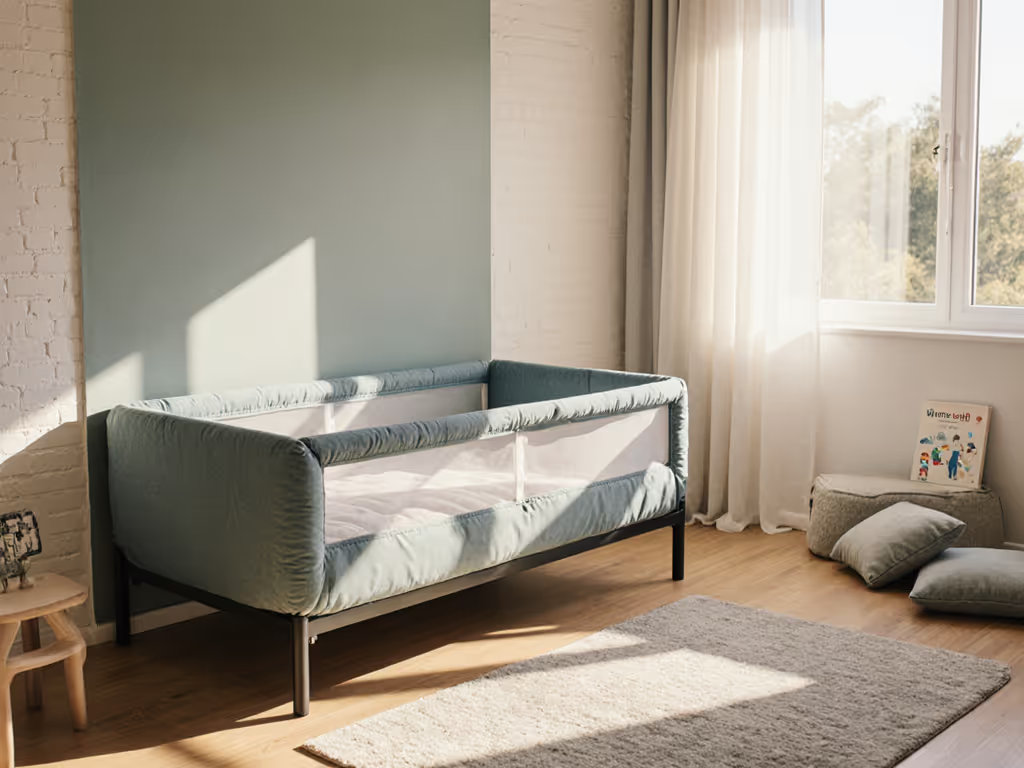
When your toddler has epilepsy, seizure-safe toddler beds aren't a luxury upgrade. They are a medical necessity. The stakes are clear: up to 30% of autistic individuals experience epilepsy, and plenty of other neurological and genetic conditions affect seizure risk in young children. Nighttime seizures can mean falls, injuries from hard corners, or disrupted breathing during a convulsion. A standard bed frame simply doesn't cut it. What matters is understanding the design hierarchy, how placement changes protection, and which features actually justify their cost in your tight quarters.
This guide breaks down epilepsy toddler bed safety through a lens of total cost of ownership (because the cheapest bed upfront often becomes the most expensive once you factor in replacement, resale loss, and the anxiety that comes with inadequate protection).
Why Standard Toddler Beds Fail During Seizures
A typical toddler bed has sharp corners, hardwood frames, and firm guardrails designed for fall prevention, not impact absorption. During a nocturnal seizure, your child thrashes, strikes surfaces unpredictably, and cannot brace for impact. Hard bed frames, exposed wood edges, and rigid rails become injury vectors. For a primer on safe guardrail heights and room layout, see our 5-inch guardrail safety guide. Studies confirm that children with epilepsy have significantly higher rates of nighttime falls and post-seizure trauma compared to their neurotypical peers.
The physics is simple: you need non-impact bed surfaces that cushion without trapping limbs. You need to eliminate hard contact points. And you need all of this in a footprint that doesn't consume your bedroom.
Core Design Features: What to Compare
Padded Surfaces and Rounded Edges
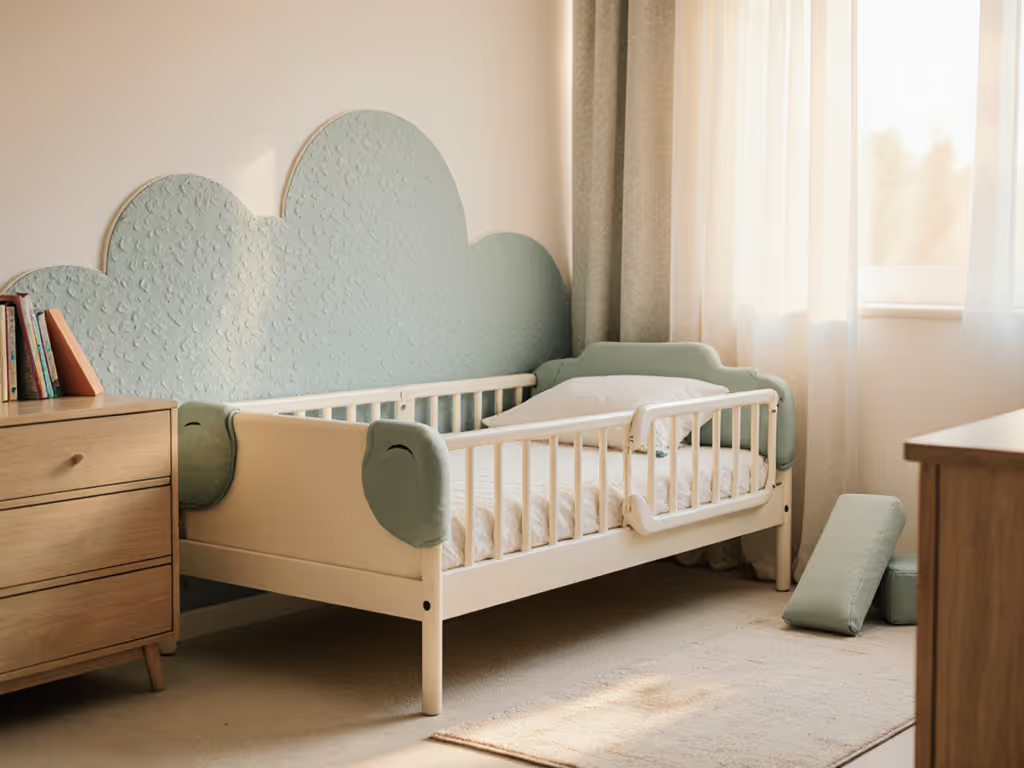
Quality seizure-safe beds use dense foam encasing and padded side panels throughout. Every edge (frame, corners, support rails) must be rounded and cushioned. The side surfaces should be firm enough to provide structure but soft enough to absorb a collision. This is non-negotiable. A cheap bed with thin padding will compress unevenly, offering less protection over time.
Look at the depreciation curve: a bed with inadequate padding will feel unsafe by year two, forcing an early replacement. That's money wasted, not invested.
Height and Fall Risk
Ultra-low height is critical. Beds that sit 6 to 10 inches off the floor reduce fall severity dramatically; lowering from 20 inches to 8 inches cuts injury risk in seizure scenarios by a measurable margin. But here's the trade-off: super-low beds eliminate under-bed storage, eating into your room's functional square footage.
In small spaces, compare the storage loss against the safety gain. A bed with adjustable height settings gives you flexibility: lower for the seizure-prone phase, raise slightly when neurological stability improves, or when your child ages out of the highest-risk period.
Breathability and Ventilation
This is where cost-cutting kills resale value. Cheap enclosed safety beds trap heat and moisture. If overheating is a concern, compare toddler bed temperature control solutions to maintain airflow and comfort without compromising safety. Your child overheats, sleeps poorly, and you end up reselling at a steep loss because the bed has a reputation for poor ventilation.
Quality beds integrate mesh ventilation panels (vertical strips beside access doors that allow airflow at mattress level without creating entrapment hazards). Breathable mesh must be strong enough to withstand pushing and pulling. This feature costs more to engineer but preserves the bed's market liquidity; when it's time to sell or pass it to a sibling, a well-ventilated bed retains 15 to 20% more resale value than a stuffy alternative.
Customizable Rails and Secure Fastenings
Adjustable side rails let you calibrate protection to your child's current needs. Some rails should be removable for caregiver access during morning checks or dressing. Others may stay fixed. The key is secure fastening (padding must not shift or loosen under stress). If rails come loose after a year, safety degrades and the bed becomes a liability, not an asset.
Profiling and Position Flexibility
Some children with seizure disorders also have respiratory issues or reflux. Profiling beds adjust the head and leg sections independently, allowing your child to sit up, elevate legs, or find a preferred sleeping angle. This adds cost but multiplies the bed's functional life. A child who initially needs flat positioning might benefit from an incline at age 3, then revert to flat at age 5. A profiling system adapts without requiring a new purchase (that's stacking function, not dollars).
Placement Strategies in Small Spaces
Wall-Hugging Configurations
In apartments and compact townhomes, positioning matters as much as the bed's footprint. A low-profile seizure-safe bed placed against a solid wall (not a bedroom door) maximizes floor space and simplifies access for nighttime monitoring. Avoid placing it near windows (temperature swings, drafts) or directly under wall outlets (cord hazards). For whole-room safety, follow our childproofing checklist for bedrooms.
Measure carefully. Verify the bed's outer width, length, and height, and leave enough clearance for doors, closets, and safe caregiver access at night.
Related Articles