
Toddler Bed Fire Safety: CPSC Standards Compared
By Maya Chen • 10th Jan
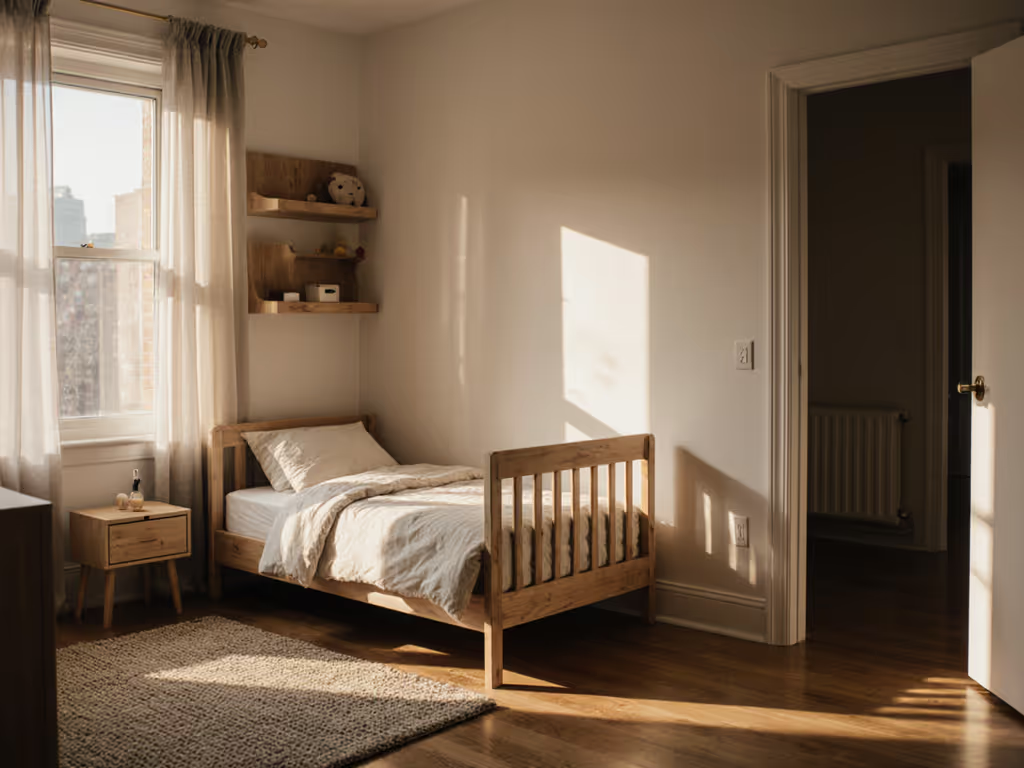
When selecting a toddler bed for your compact living space, toddler bed fire safety shouldn't be an afterthought, it's as critical as measuring clearance paths. And flame-resistant toddler beds aren't just a marketing buzzword; they're your child's literal first line of defense. Yet in my seven years designing small-space nursery layouts, I've watched parents sacrifice safety for space, squeezing in decorative beds that fail CPSC fire standards while blocking emergency pathways. Today, I'll break down what actually matters in fire safety compliance without compromising your precious square footage.
As I tell every family I work with: In tiny rooms, every inch should work twice. That includes safety features that serve dual purposes (like fire-resistant materials that also reduce visual weight).
Understanding the CPSC Fire Safety Framework
The Consumer Product Safety Commission (CPSC) regulates toddler beds under ASTM F1821, but fire safety requirements operate differently than you might assume. Unlike children's sleepwear (which must be either flame-resistant or tight-fitting), CPSC fire safety standards for toddler beds focus primarily on materials testing and flammability resistance, not specific fire-retardant treatments. If you’re considering imported beds, review our US vs EU toddler bed standards to understand size and certification differences.
Here's what you need to know:
-
Mattress flammability: All toddler mattresses sold in the U.S. must comply with 16 CFR Part 1632, requiring resistance to ignition from smoldering cigarettes. This standard applies regardless of bed frame type.
-
Frame materials: Unlike sleepwear regulations, the CPSC doesn't mandate specific flame-resistant treatments for bed frames. However, the law requires all children's products to undergo flammability testing. Since 2019, the CPSC has referenced ASTM F1821-19ε1 as the mandatory standard for toddler beds.
-
Third-party testing: Every toddler bed must be tested by a CPSC-accepted laboratory for compliance with applicable safety rules. This includes flammability assessments of all components.
One Tuesday visit sticks with me: a family insisted their 7'×9' room couldn't accommodate a safe bed configuration. By measuring clearance paths first and choosing a low-profile frame with fire-resistant materials, we reclaimed 18 inches of floor space while clearing the nighttime path (and their toddler slept soundly that afternoon).
Flame-Resistant vs. Fire-Retardant: What Actually Matters
Many parents confuse "flame-resistant" with "fire-retardant," but the distinction is crucial for safety and space planning:
| Feature | Flame-Resistant | Fire-Retardant |
|---|---|---|
| Definition | Material inherently resistant to ignition | Treated with chemicals to slow burning |
| Duration | Long-term (won't wash out) | May diminish over time |
| Space Impact | Lighter visual weight, thinner profiles | Often requires thicker materials |
| Safety Certification | CPSC requires third-party testing | Must comply with 16 CFR Part 1633 for mattresses |
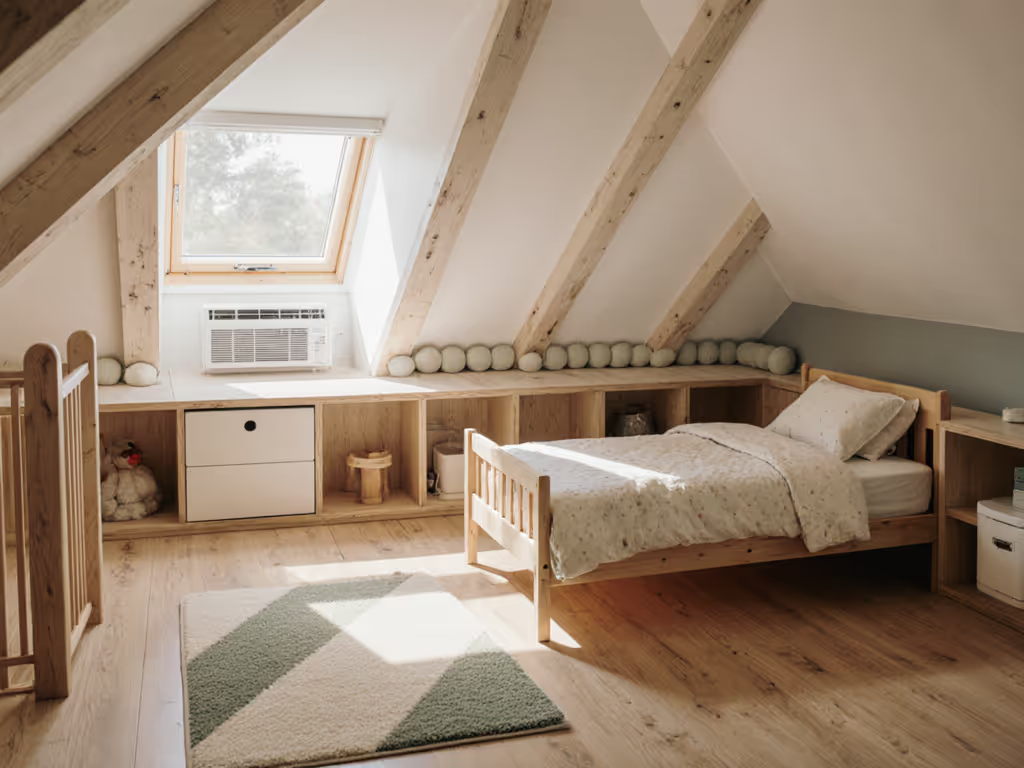
During my site assessments, I prioritize fire-retardant toddler bed materials that maintain a low profile, typically solid wood frames (which naturally resist flames better than composites) with finish certifications. Avoid beds with excessive fabric upholstery in tight spaces; they increase flammability risks and visual clutter.
Space-Conscious Fire Safety Features
In micro-rooms, fire safety features must pull double duty. Here's what to prioritize when floor space is scarce:
Guardrail Height and Clearance
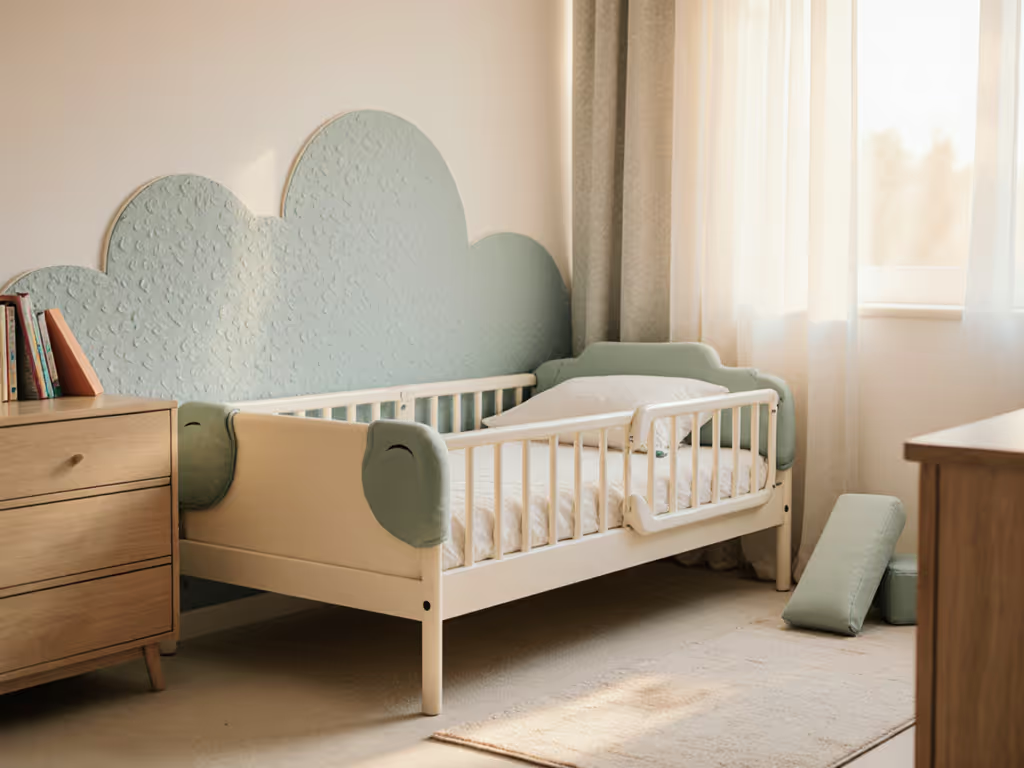
The CPSC mandates that guardrails extend at least 5 inches above the mattress. But in cramped quarters, this becomes a spatial calculation:
- Minimum bed height: 11" (28 cm) from floor to mattress top
- Required guardrail height: +5" (12.7 cm)
- Total clearance needed: 16" (40.6 cm) upward
This vertical requirement impacts your layout significantly. In a room with 8' ceilings, that's negligible, but in spaces with low clearance (like under-loft bedrooms), it could mean choosing a 6"-thick mattress instead of 8" to maintain breathing room while clearing the nighttime path.
Smoke Exposure Bed Design
For apartments with limited escape routes, consider these fire-smart layout strategies:
- Position beds with clear 36" (91 cm) egress paths to doors or windows
- Avoid corner placements where smoke exposure creates dead zones
- Measure twice: Your child's crawling path must remain unobstructed during evacuation
Last month, I helped a Seattle family reconfigure their 8'×10' bedroom by pivoting a low-profile bed 45 degrees. The new angle created a diagonal escape route while maintaining the required clearance (proving that strategic positioning can enhance safety without adding square footage).
Testing What Matters: Beyond the Labels
With countless "fire-safe" claims online, how do you verify actual compliance? Here's my field-tested verification checklist:
- Check for certification: Every compliant bed must have a Children's Product Certificate (CPC) referencing "16 CFR part 1217"
- Examine the label: Look for permanent tags stating compliance with ASTM F1821
- Request test reports: Reputable sellers should provide third-party flammability test results
- Avoid at-home flame tests: Do not expose materials to open flame. Instead, review the lab reports and permanent labels, and ask the retailer or manufacturer for documentation that confirms compliance. To decode ASTM, CPSC, JPMA, and GREENGUARD claims, see our toddler bed safety certifications comparison.
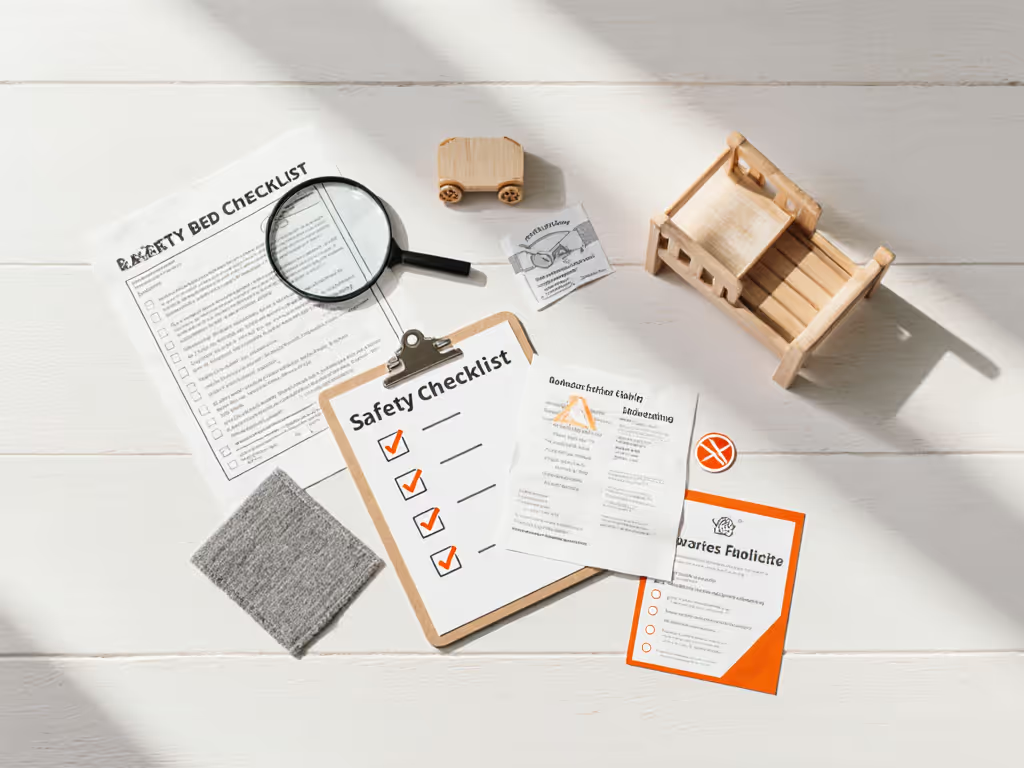
In 2023, the CPSC recalled over 50,000 Dream On Me toddler mattresses for failing flammability standards. Don't assume mattress safety, verify independently, especially with secondhand finds that could compromise your entire fire safety strategy. Before buying used, follow our second-hand toddler bed safety checklist.
Small-Space Fire Safety Layout Strategies
Your bed selection isn't just about the product, it's about how it functions within your micro-environment. These spatial strategies maximize both safety and square footage:
The 30-Inch Rule
Maintain 30" (76 cm) clearance around all sides of the bed, which serves dual purposes:
- Creates viable escape routes during fire emergencies
- Provides necessary access for nighttime diaper changes
For rooms under 100 sq ft, this often means choosing beds with L×W dimensions under 54"×30" (137×76 cm). Many "toddler" beds actually measure 59"×32" (too large for true micro-spaces and potentially blocking emergency pathways).
Window Proximity Calculations
If positioning near windows for potential escape:
- Minimum bed-to-window distance: 24" (61 cm)
- Maximum sill height: 44" (112 cm) for child egress
- Required clearance width: 36" (91 cm) for emergency access
This spacing requirement often gets overlooked in compact layouts, but proper window access could mean the difference between life and death in a fire emergency. For room-by-room planning, use our toddler bed emergency egress guide.
Visual Weight Reduction Tactics
High-visual-weight beds create perceived clutter that compromises both safety and calm:
- Opt for beds with open slat designs (reduces visual mass by 40%)
- Choose neutral finishes that blend with walls (creates 15% more perceived space)
- Avoid decorative posts that increase entrapment risk and visual noise
Every square inch of visual clutter narrows your mental pathways for emergency response, another reason why every physical inch must work twice.
Actionable Fire Safety Checklist for Space-Constrained Parents
Don't let limited square footage compromise your child's fire safety. Implement these space-smart steps immediately:
- Measure your escape routes first, not your desired bed size. Your primary clearance path must maintain minimum 30" width from any sleeping position to the nearest exit.
- Verify flammability compliance: request third-party test reports from retailers before purchasing. The CPSC requires these for all children's products.
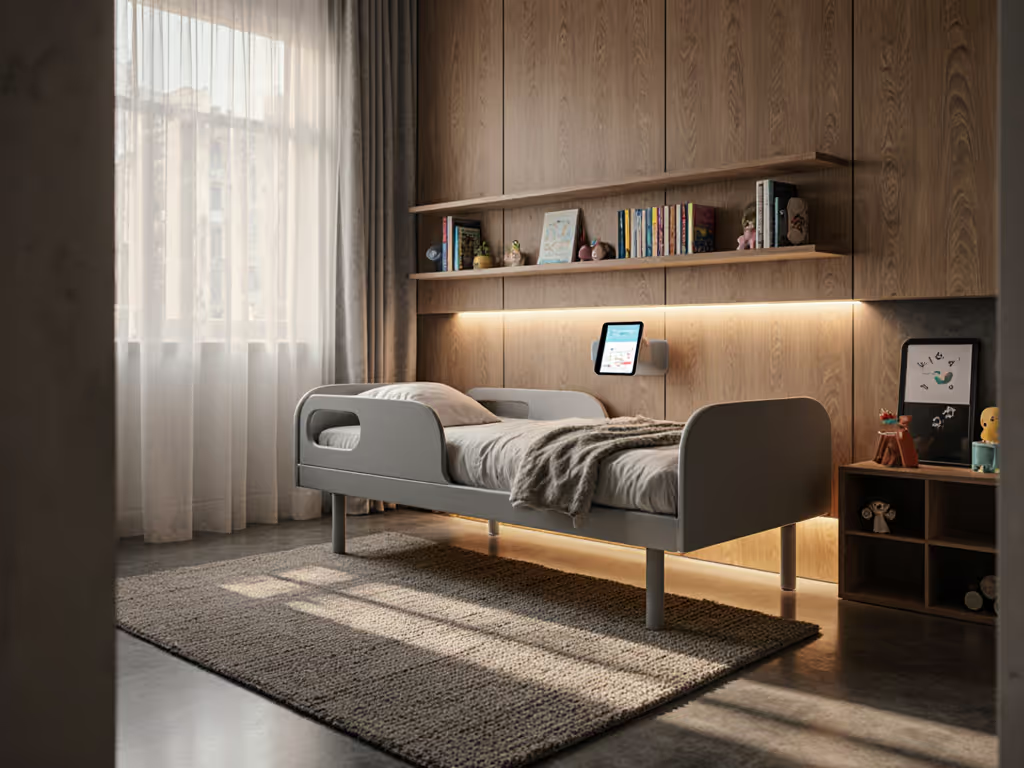
- Prioritize low-profile designs: select beds under 12" height (30.5 cm) to maintain ceiling clearance while reducing visual weight.
- Create dual-purpose safety zones: position beds where guardrails both prevent falls and maintain smoke-free breathing space during fire.
- Test your layout: use painter's tape to mark bed dimensions and simulate evacuation routes. Time your emergency response with obstacles in place.
Last week, I helped a New York apartment family avoid a dangerous compromise, they'd nearly purchased a "space-saving" loft bed that violated multiple CPSC fire safety standards. By choosing a compliant low-profile frame with verified fire-resistant materials, we maintained their cherished floor space while eliminating fire risks.
Remember: Measure twice, visualize bedtime paths, then choose what fits. Your child's safety shouldn't shrink with your square footage. In tiny rooms, fire safety isn't about adding features, it's about reclaiming inches that work twice as hard.
Related Articles