Toddler Bed Safety in Seismic Zones: Anchoring
By Jamal Adeyemi • 19th Feb

Earthquake toddler bed safety and seismic zone bed anchoring represent a critical but often overlooked layer of childproofing for families living in earthquake-prone regions. When a toddler occupies a bed in a shake event, the stakes shift immediately, as a piece of furniture transitions from a sleep surface to a potential hazard if it tips, slides, or fails structurally during ground motion. This guide translates industry standards and engineering principles into actionable steps that small-space parents, particularly renters in dense urban and coastal markets, need to protect their toddlers during seismic activity.
Understanding the Risk Hierarchy for Toddler Beds During Earthquakes
Why toddler beds present a distinct seismic vulnerability
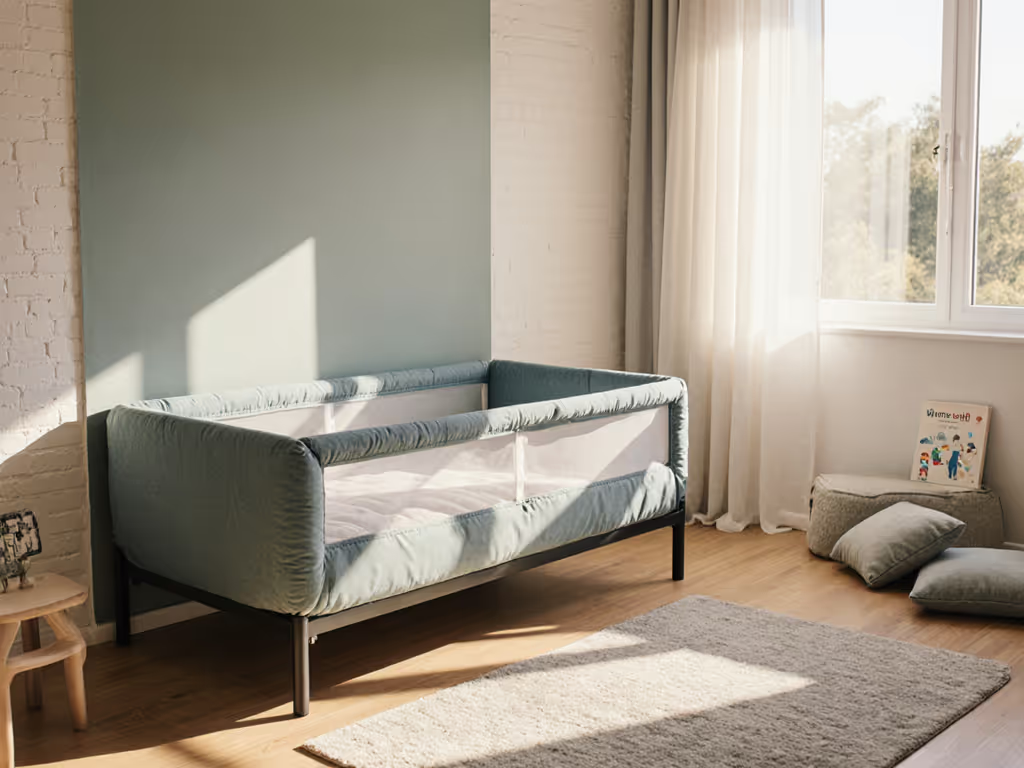
Toddler beds occupy a specific niche in the furniture safety landscape. Unlike full-size bunk beds (which are taller and carry different tipping dynamics), toddler beds sit lower but often have design elements (rails, curved headboards, decorative hardware) that change how they behave under acceleration. The center of gravity, the stability of anchoring hardware, and the materials used in joinery all factor into whether a bed will remain stationary or become a projectile during ground motion.
Furniture tipping is one of the leading causes of injury during earthquakes, particularly in households with children.[3] For a whole-room checklist, see our childproofing and anchoring guide. A toddler bed that slides across a room or tips sideways during shaking exposes the child to impact, entrapment, or crushing hazards. The risk hierarchy here is straightforward: anchor first, choose a stable design second, place it strategically third.
Why design matters before anchoring
Not all toddler beds are anchoring candidates. Before you select anchoring hardware, the bed itself must have a reasonable center of gravity and frame integrity.[1] Beds with a low profile, a wider base, and reinforced joints are inherently more resistant to tipping (bed stability and weight distribution). Solid wood or reinforced metal construction is more reliable than particle board with dowel joints, which can fail under the shear stress of repeated seismic movement.[1]
I watched this principle unfold at a playdate when a well-meaning high rail turned into a lever as a child tried to vault it. No injury that day, but it changed how I think about earthquake risk: stability isn't about defending against a single worst-case. It's about starting from the floor up: rounded edges, low centers of gravity, stable steps, secure hardware.
FAQ: Practical Questions on Anchoring Toddler Beds in Seismic Zones
Q: What is the difference between anchoring to studs versus drywall anchors?
A: This distinction is fundamental and non-negotiable. Wall studs (the wooden or metal framing behind drywall) are rated to handle the lateral force generated during an earthquake. Drywall anchors (expansion plugs, toggle bolts) hold lightweight objects but provide minimal seismic resistance.[4] A toddler bed anchoring system must transfer the bed's inertial force into the home's structural frame, not into drywall alone. This means every strap or bracket connection must fasten into a wall stud using fasteners (typically 3/8-inch lag bolts or wood screws) rated for the load. Document, don't assume. Verify stud locations with a stud finder before purchasing anchoring hardware.[4]
Q: How many anchor points does a toddler bed need?
A: The answer depends on the bed's weight, footprint, and the quality of available wall studs. Industry guidance suggests that anchoring hardware should be rated for at least the combined weight of the bed frame, mattress, and a child at full acceleration.[1] For a typical toddler bed (25-40 pounds) in a seismic zone rated for 0.4 g or higher, two heavy-duty L-brackets or straps (one at the head and one at the foot) attached to separate studs is a baseline.[1] Wider beds or those in regions with higher seismic hazard may benefit from a third anchor point at the midpoint or a diagonal configuration. More anchors distribute load more evenly and reduce stress on any single connection point.
Q: What materials should anchoring hardware be made from?
A: Anchoring hardware must resist rust and maintain tensile strength over years of use. Galvanized steel or stainless steel brackets and straps are standard.[1] Avoid plated hardware, which can corrode and lose integrity. Fasteners (bolts, screws) should also be rated for outdoor or marine use if you live in a humid coastal climate. Regularly inspect hardware for corrosion, especially after any seismic event.[1]
Q: How do I secure a toddler bed if I rent and cannot drill into walls?
A: Renters face a genuine constraint, and this deserves honest acknowledgment. Permanent wall anchoring is typically prohibited in lease agreements. Low-friction alternatives (such as anti-slip pads or rubber mats under the bed) can help reduce sliding on hardwood or tile floors, but they do not eliminate tipping risk.[1] A conversation with your landlord about temporary, removable fastening systems (such as those using adhesive strips designed for drywall) may be possible, though effectiveness is limited. The most practical renter strategy is to position the bed against an interior load-bearing wall (typically shared with a neighboring unit) and ensure the bed design itself is inherently stable. Placing the bed in a corner, away from windows and heavy wall-mounted objects, also reduces secondary hazards.[1]
Q: What is the right distance between the mattress and guardrails?
A: Health Canada's safety guidelines specify that guardrails on toddler beds should leave no gap wider than the width of your hand (roughly 3-4 cm) between the mattress and the rail to prevent limb entrapment.[2] (Also see the 5-inch guardrail rule for US-focused guidance.) This requirement is independent of seismic safety but becomes more important during ground motion when the child may shift or press against the rail. Inspect these gaps periodically, particularly after assembly or if the mattress compresses over time.
Q: How do I verify that my anchoring installation is correct?
A: Document, don't assume. After installation, perform a manual push test: gently but firmly try to tip or shift the bed by hand. Properly anchored beds will resist lateral movement with minimal deflection. Use a level to confirm the bed remains plumb. Check that all bolts and fasteners are tight (do not over-torque; tighten until snug). Photograph the anchor points and fastener connections for future reference and for insurance documentation. After any earthquake (even a small one), reinspect the anchors and fasteners immediately. Ongoing toddler bed maintenance helps catch loosening hardware and wear before it becomes a hazard.
Design Features That Work With Anchoring
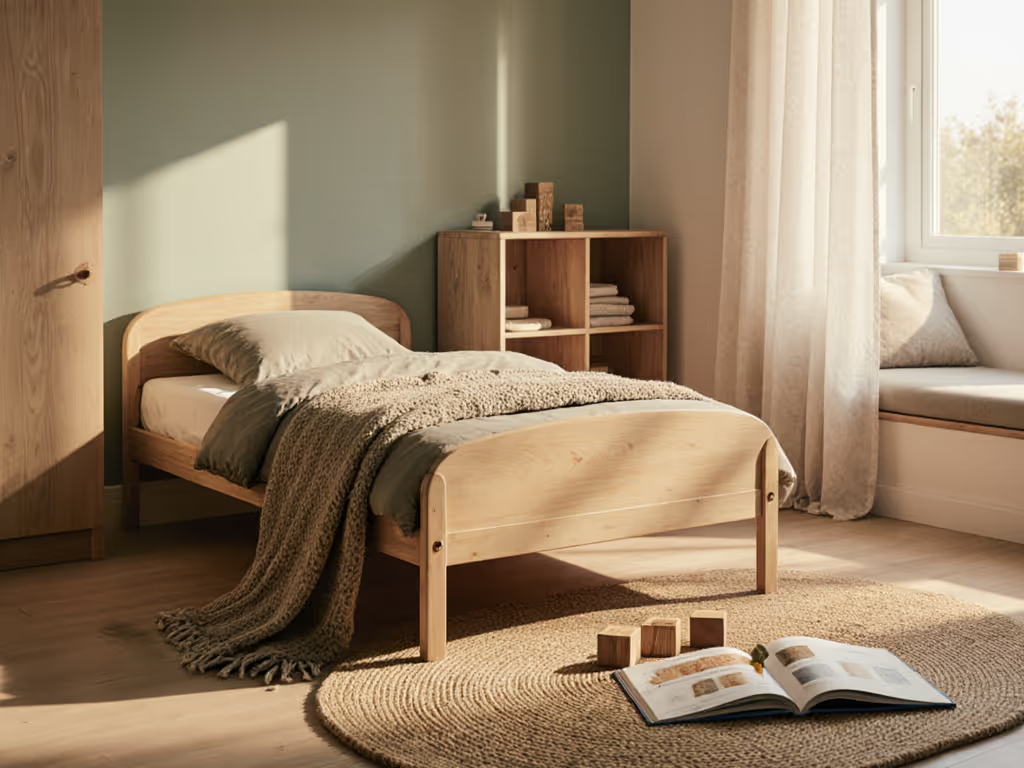
Anchoring hardware is only as effective as the bed frame it secures. Look for designs that feature edge radius in corners (rounded rather than sharp 90-degree angles), reinforced joints, and a low profile that keeps the mattress surface within 12 inches of the floor for toddlers aged 18 months to 4 years.[2] The frame should not rock or sway when weight is applied; any movement suggests compromised joinery or low-quality materials.
Finish and material transparency matter here. Request a VOC disclosure (volatile organic compound information) from the manufacturer to confirm off-gassing levels are within acceptable ranges.[2] Materials that off-gas are not inherently unsafe, but they do signal whether the manufacturer has invested in quality control and compliance tracking.
Strategic Placement and Secondary Hazard Mitigation
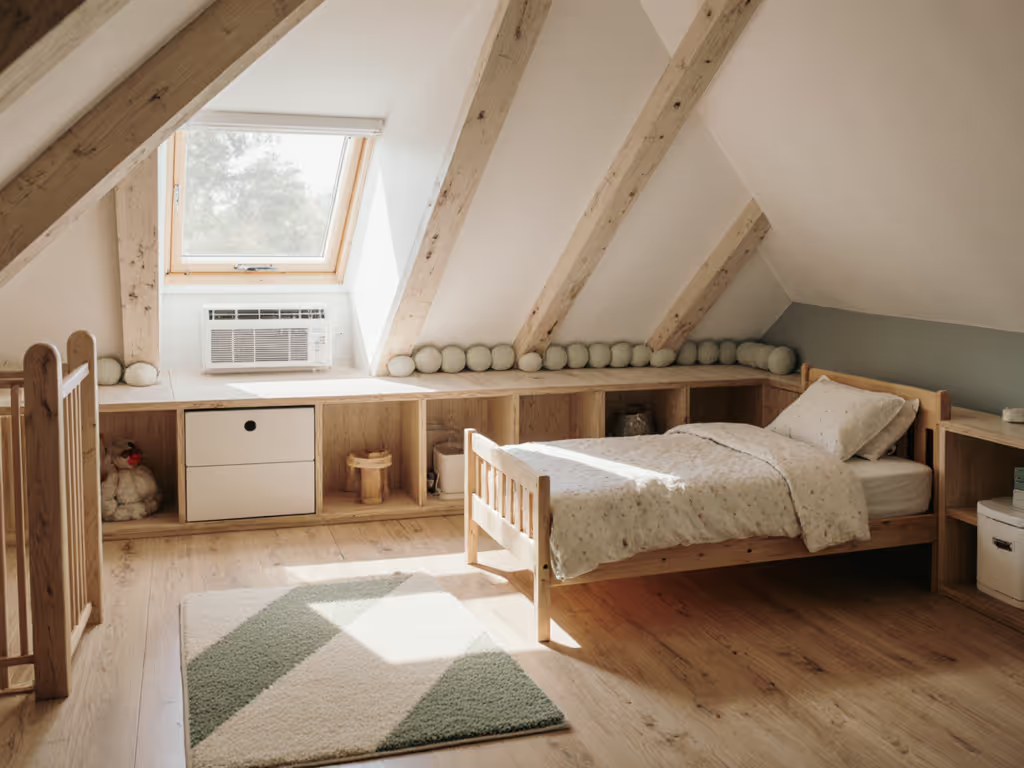
Even a perfectly anchored bed requires smart room placement. Avoid positioning the bed under wall-mounted shelves, light fixtures, or artwork that could fall during shaking.[1] Do not place the bed near windows, which may shatter and scatter glass. Ensure the bed does not block the child's primary exit route (doorway) and allows parents quick access in low-light conditions. For layout specifics, see our toddler bed emergency egress guide. A toddler bed in a corner against two walls provides additional stability beyond anchoring alone, though it does not replace proper hardware fastening.
Further Exploration
For families in West Coast seismic zones or any region with significant earthquake risk, earthquake-proof toddler beds are not a category of furniture; they are standard beds combined with rigorous anchoring. The confidence that comes from verification is worth the time investment. Review your local seismic hazard maps through the United States Geological Survey (USGS) or your regional earthquake authority to understand the design acceleration for your area. Connect with other small-space parents in your region through local parenting forums to compare anchoring approaches and share vendor recommendations for structural fastening. Finally, involve your pediatrician or occupational therapist if your toddler has mobility or sensory considerations that affect safe bed design. Boring and low beats pretty and risky every time, and proper anchoring ensures your toddler's bed remains exactly where you put it, no matter what the ground is doing.
Related Articles