
Adjustable Height Toddler Beds vs Fixed: A Smart-Space Guide
By Anika Gupta • 29th May
In small homes, every inch is a decision, and adjustable height toddler beds promise to do more work in the same footprint than a standard fixed-height frame. This FAQ deep dive is your variable height toddler bed comparison from a space, safety, and materials point of view, so you can choose once and feel done.
If you can smell it, plan to air it.
As a materials researcher-turned-parent, I've learned that invisible comfort (air quality, noise, off-gassing timeline) is just as important as the mattress itself. Let's break this decision down so it's not one more late-night rabbit hole.
FAQ 1: What exactly are adjustable height toddler beds?
Q: How is an adjustable-height toddler bed different from a regular one?
A:
- A fixed-height toddler bed has the mattress at one permanent height above the floor.
- Adjustable height toddler beds have 2-4 preset mattress positions, so you can move the sleeping surface up or down as your child grows.
Think of them as staged height transition beds:
- Stage 1 - Ultra-low: Mattress almost on the floor for the first months after leaving the crib.
- Stage 2 - Standard toddler height: Slightly higher, easier for your back when you sit for bedtime.
- Stage 3 - Daybed/mini-sofa height: When the guardrails come off and the bed doubles as seating.
Mechanically, adjustment usually happens in one of two ways:
- Slat platform moves: Metal or wooden brackets at different levels on the frame.
- Legs or base swap: Less common (short and tall leg sets or risers).
From the outside, both adjustable and fixed options can look almost identical. The real differences are in:
- Under-bed clearance
- Rail height above the mattress
- How long the bed feels "right-sized" for your child
FAQ 2: Which is safer - adjustable height or fixed-height beds?
Q: Is one type safer for falls and nighttime wandering?
A: Safety is less about adjustable vs fixed, and more about height-modifiable bed safety details.
Key safety factors (for both types)
- Fall distance: For toddlers just leaving the crib, aim for a very low profile, often 6-10 inches from mattress top to floor.
- Guardrail design: Look for rails that:
- Extend at least halfway down the mattress length
- Have small, evenly spaced openings (no head/limb entrapment gaps)
- Are securely bolted to the frame, not just slid into place
- Mattress fit: Minimal gap between mattress and rails/footboard so small hands and limbs don't get wedged.
- Stability: A solid frame with cross-bracing or robust slats that doesn't wobble when you sit on the edge.
Where adjustable height can add safety
For growth-adjustable toddler beds, being able to move the mattress over time lets you:
- Start extra low during the wobbly, newly-out-of-crib phase.
- Gradually increase height as coordination and nighttime awareness improve.
This "staged" approach supports toddler bed height customization:
- For a very young or active sleeper, use the lowest setting.
- For a confident climber or potty-training toddler, raise the bed slightly to make getting up and down easier (and your back less strained).
When a fixed-height bed can be just as safe
A very low fixed bed (especially floor beds or frames only a couple of inches off the ground) can be extremely safe for falls:
- If roll-outs are your main concern, a low fixed frame with a good rail set is often enough.
- Many Montessori-inspired families choose a fixed, near-floor setup for maximum independence.
Bottom line: Adjustable height gives you more control over risk as your child changes. A well-designed low fixed bed can still be a very safe choice if it starts at the right height.
FAQ 3: How do these beds work in tiny rooms and shared spaces?
Q: Which option fits better in a very small or shared room?
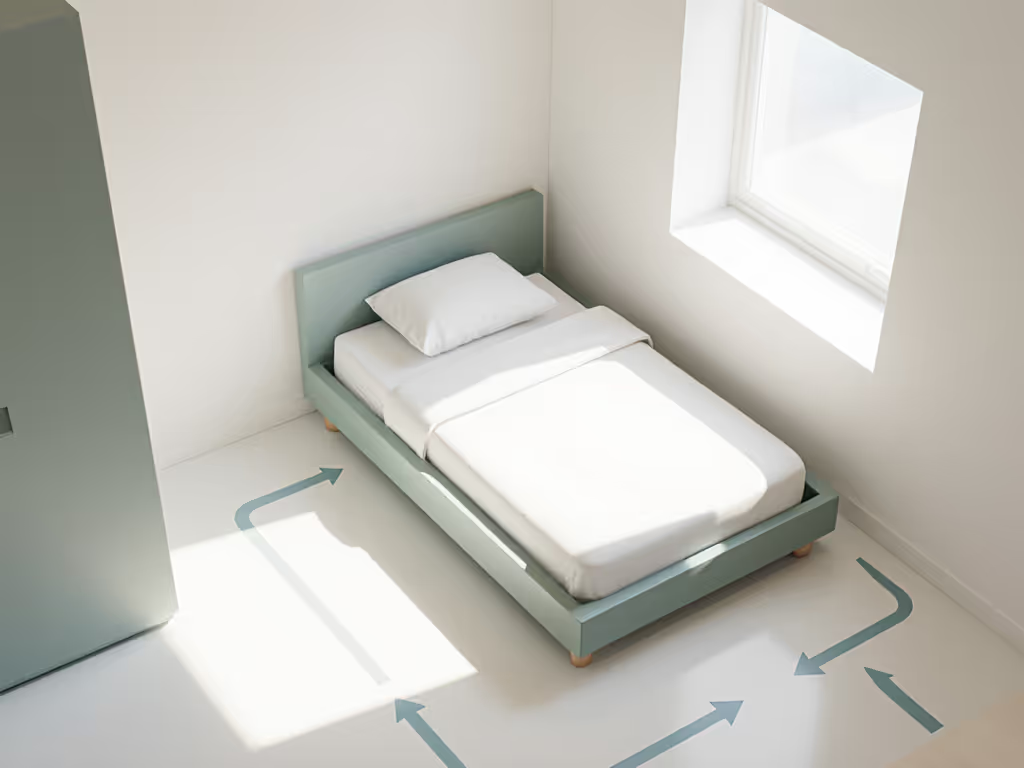
A: In compact layouts, think in three layers: floor clearance, under-bed use, and circulation.
Floor clearance & door/closet swing
- Fixed-height beds are simple: once they're placed, the under-bed clearance and rail height never change.
- Adjustable beds let you tweak clearances over time. For instance:
- Start low so the bed can go under a low window sill.
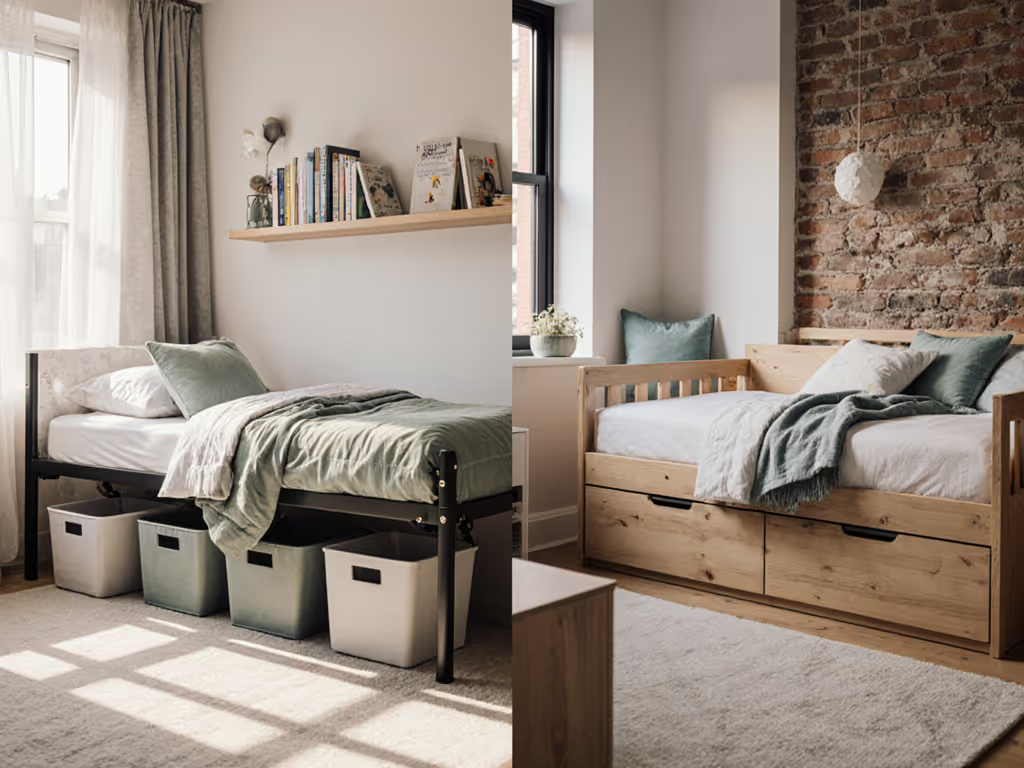
- Later raise the mattress so you can slide shallow storage bins or a trundle under the frame.
For families juggling two kids in one room:
- Starting with a lower height can keep visual bulk down and make the room feel less cramped.
- Later, raising the bed can free up under-bed storage when toys and clothing multiply.
Storage potential
Under-bed space is where adjustable designs pull ahead in a variable height toddler bed comparison. For model ideas that balance storage and low heights, see our toddler storage beds guide.
- With a fixed low frame, you might win on safety but lose the ability to use standard storage bins.
- With an adjustable frame, you can:
- Use the lowest setting at the beginning (no storage, maximum safety).
- Switch to a higher setting once your child sleeps more calmly, gaining room for labeled bins or rolling drawers.
Visual clutter & room feel
Space-sensitive parents often care as much about how a room feels as how it measures:
- A very tall bed can make the walls seem shorter and the room busier.
- A low-profile bed, adjustable or fixed, usually looks calmer, especially in small spaces.
Adjustable designs are helpful if you:
- Want a super-low, almost-floor look now, but
- Still want the option to create storage or a daybed-style reading spot later.
FAQ 4: Which lasts longer - adjustable or fixed-height toddler beds?
Q: Will an adjustable bed really buy me more years of use?
A: Often, yes, but only if the basics are right.
Longevity factors to check
Whether adjustable or fixed, focus on:
- Mattress size: Standard crib-size or twin-size mattresses are easiest to reuse and resell.
- Weight rating: Make sure it's rated for at least a school-aged child so you're not shopping again at age 4-5.
- Rail removability: Beds that convert to a daybed or small sofa after the rail stage extend their useful life substantially.
- Neutral styling: Simple lines and calm colors age better and have higher resale appeal.
How adjustable height boosts lifespan
Growth-adjustable toddler beds adapt to different stages without changing furniture:
- Toddler phase: Lowest height, full rails.
- Preschool phase: Moderate height, partial rail or open side for independence.
- Later phase: Higher setting as a daybed for reading, snuggles, or sleepovers.
That flexibility means you can:
- Keep the bed in the same room as layouts change.
- Move it to a sibling or guest room later.
This aligns with a philosophy I live by: repair beats replace. A sturdy frame with adjustable features, replaceable slats, and standard mattress sizing can realistically serve multiple kids or move through different roles in your home.
When a fixed bed can still be the "longest-lasting" choice
A simple, solid, fixed-height twin bed often outlives the toddler stage by a decade. If your small space allows a low twin from the start, a fixed-height frame might win on lifespan alone.
FAQ 5: What about materials, finish chemistry, and off-gassing?
Q: Are adjustable beds more likely to off-gas or be made from engineered wood?
A: Adjustable vs fixed doesn't inherently change materials, but many adjustable products use a mix of solid and engineered wood.
Solid vs. engineered wood clarity
When reading specs:
- Solid wood: Usually better for durability and lower emissions if paired with low-VOC finishes.
- Engineered wood (MDF, particleboard): Can be stable and affordable but may use formaldehyde-based resins.
Look for clear language like:
- "Solid beech/ash/pine frame; plywood slats."
- "CARB II compliant MDF panels."
If the listing just says "wood" with no further detail, treat it as a question mark, not a safety guarantee. To verify claims, use our breakdown of toddler bed safety certifications.
Finish chemistry & VOCs
Beds (adjustable or fixed) are usually sealed with either:
- Water-based finishes: Generally lower VOC, dry faster, and have less odor.
- Solvent-based finishes: More durable in some cases but often higher VOC and more pungent.
You are looking for:
- Mentions of water-based or low-VOC finishes.
- Certification logos or clear statements about emissions testing.
From experience, our first toddler bed arrived smelling like a paint aisle. A week of hallway airing and a VOC meter confirmed what my headaches already knew: early off-gassing is real. Since then, I treat new furniture the same way I treat fresh paint, ventilated and given time. If you can smell it, plan to air it.
Off-gassing timeline
While exact numbers vary by product and room conditions, a practical plan is:
- Day 0-3: Unbox in a well-ventilated room (or hallway). Leave drawers, rails, and mattresses exposed.
- Day 3-7: Most noticeable odors drop significantly. If smell remains strong, give it more time before your child sleeps on it.
This applies equally to adjustable and fixed beds. The bigger levers are materials, adhesive types, and finishes, not height settings.
FAQ 6: How do I choose the right height settings over time?
Q: If I go adjustable, how do I actually use the different levels?
A: Think about three overlapping needs: safety, independence, and adult comfort.
A simple staged-height plan
-
Just-out-of-crib (roughly 18-30 months)
- Use the lowest setting.
- Combine with full-length guardrails or at least 3/4-length rails.
- Prioritize roll-out safety over under-bed storage.
-
Confident climber / early potty training
- Consider moving to a mid-level setting if the lowest feels back-breaking.
- Keep at least some rail or a crash pad next to the open side.
- Ensure they can climb in and out independently without jumping.
-
Preschooler with stable sleep habits
- Mid or higher setting depending on ceiling height and your room layout.
- Rails can often be shortened or removed to turn the bed into a daybed.
When to keep it low longer
Maintain the lowest height if:
- Your child is a very active sleeper.
- You're sharing a room and want to minimize disturbance if they roll.
- The bed sits near a radiator, window, or other hard surface.
Remember: toddler bed height customization is there to serve your child, not to rush them into a "big kid" look. Not sure it's time to switch? Review toddler bed readiness signs before moving off the crib.
FAQ 7: Is assembly, noise, and maintenance different between the two?
Q: Are adjustable-height beds harder to assemble or noisier?
A: Adjustable frames add a few more parts, but a well-designed one should still assemble in under an hour with basic tools.
Assembly and stability
- Adjustable beds:
- Expect extra hardware for slat brackets or leg options.
- Follow the manual closely for the initial height choice; changing later is easiest if you keep the tool kit handy.
- Fixed beds:
- Often slightly fewer parts.
- Fewer joints can mean fewer points for squeaks to develop, but this depends heavily on build quality.
Noise and wobble
For both types, a quieter bed usually has:
- Solid joints with metal hardware, tightened firmly.
- Slats that lock or screw into place (not just laid loosely).
- Center support or cross-bracing that prevents racking.
Make a simple maintenance plan:
- Re-tighten all screws and bolts after the first month (wood can settle).
- Check hardware every 3-6 months or after moving the bed.
- If you hear a squeak, isolate it by applying gentle pressure around the frame until you find the culprit joint.
Again, the quietest bed is not inherently adjustable or fixed; it's the one with better materials and hardware, and a bit of periodic attention. For a complete upkeep checklist, follow our toddler bed maintenance guide.
FAQ 8: How do I decide what's right for my tiny space?
Q: Is there a step-by-step way to choose between adjustable and fixed?
A: Yes. Use your floor plan and your family's timeline to answer these questions.
Step 1: Map your room constraints
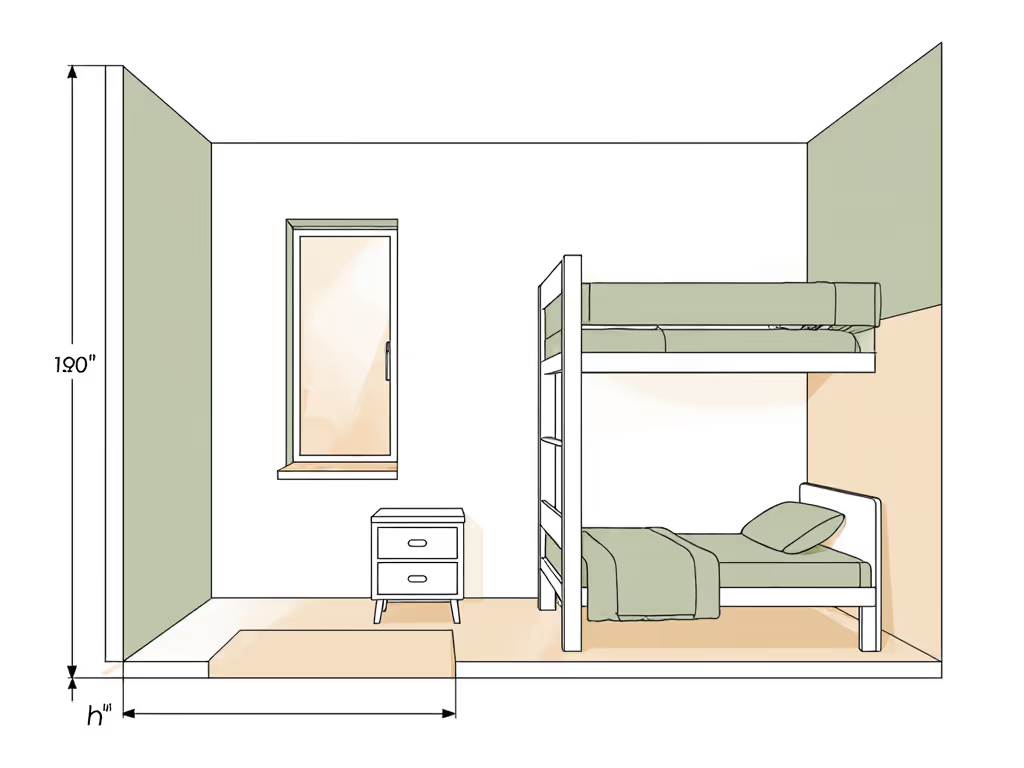
- Measure wall lengths, window heights, radiator positions.
- Note door and closet swing arcs.
- Decide where you need a clear pathway at night for you and your toddler.
If the bed must tuck under a low window or into a tricky corner, an adjustable option can help you fine-tune height to fit.
Step 2: Clarify how long you need this bed to serve
- Are you freeing up the crib for a baby and expecting to pass the toddler bed on in 2-3 years?
- Or do you want the frame to last into early grade school?
If you want multi-stage use and maybe a future daybed, adjustable height plus removable rails earns its keep. If you expect to move quickly to a full twin in another room, a simple fixed low bed might be enough.
Step 3: Weigh safety vs storage
Ask yourself:
- "Do I need under-bed storage now, or can it wait a year?"
- "Is my child's sleep so active that I prefer sacrificing storage to minimize any fall distance?"
If storage is urgent in a very tight room, an adjustable design lets you start low and unlock storage later.
Step 4: Check materials and finishes before everything else
Regardless of height:
- Prioritize clear material disclosure (solid vs engineered wood clarity).
- Look for low-VOC, water-based finishes and independent emissions testing where available.
- Plan for a short off-gassing timeline with ventilation before first use.
Step 5: Think beyond the toddler years
Can the bed:
- Convert to a daybed, reading nook, or guest bed?
- Move seamlessly to a sibling or grandparent's house?
- Be easily maintained so you're not forced to replace it at the first wobble?
Whenever possible, choose designs where repair beats replace: standard hardware, accessible slats, and sturdy frames that tolerate retightening and occasional touch-ups.
Where to go from here
If you're still on the fence, sketch two mini floor plans: one with a very low fixed bed, one with an adjustable bed at different heights. Note under-bed storage, rail clearances, and pathways for nighttime checks.
Then, as you compare real products, use three filters in this order:
- Materials & finish chemistry (clear disclosures, low-VOC claims).
- Height options and rails (do they match your child's stage and your room's constraints?).
- Longevity potential (standard mattress size, conversion options, and build quality).
From there, you're not just choosing a toddler bed; you're choosing how your small space will feel, and how smoothly your child will grow into it.
Related Articles
Best Convertible Cribs for Tiny Rooms: Verified Safety Picks
Choose a space-saving convertible crib without compromising safety, using verified standards, stability and edge checks, low-VOC materials, and dependable conversion hardware. Follow the checklist to plan a secure setup that keeps the same compact footprint from infancy through toddlerhood.